
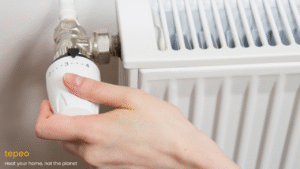
The shift to a low carbon home is often sold to us as a series of expensive, week-long headaches. To stop burning fossil fuels, we’re told to insulate first, then replace our windows / doors, lift floorboards, swap radiators, as well as find space in the garden for heating equipment.
For many, that’s not a “transition”- it’s a home invasion.
But what if you could ditch your gas or oil boiler and be fossil fuel-free within 48 hours?
Heat batteries, like our ZEB, provide a smooth path away from fossil fuels; particularly where there’s no space outside, time is of the essence or an extensive renovation is off the table.

Why is shifting to electric heating often difficult? And why is a heat battery different?
For many, the first low carbon heating system they come across is a heat pump.
They are incredibly efficient when installed well, with low running costs and grants available to help with the upfront cost. There’s no doubt these will play a crucial role in helping the UK move away from fossil fuels.
But, to run efficiently they need to operate at relatively low flow temperatures. Around 45-55oC (ideally lower) vs the 60-75oC many boilers are set to.
Setting up your heating system so that these lower flow temperatures still keep things toasty can create a number of challenges: upsizing radiators to deliver enough heat where it’s needed, adding new radiators to heat evenly across larger rooms, and replacing pipework to allow more water to flow through your system.
It’s very common for a heat pump installation to become a full heating system renovation – with all the associated time, cost and disruption this involves. In many cases, that process alone can put people off.
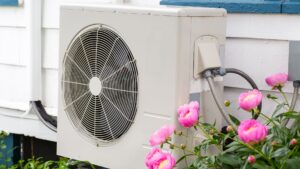
It might be tempting therefore to just install an electric boiler – high temperatures, no system overhaul… simple! But, this means running your home on peak-priced electricity. A quick install, but also a very quick route to high electricity bills.
But there is a solution to this! A quick & simple replacement for fossil fuels, that delivers boiler flow temperatures AND uses off-peak power to keep bills low. It’s called a heat battery.
Heating like its hot
Because heat batteries, like our ZEB, store energy as heat, we have a lot of heat to play with.
Once charged up, the ZEB deploys its stored energy much like a boiler – producing flow temperatures similar to gas / oil / lpg. This lets us leave the rest of your heating system alone during the installation. As long as your heating system is working as expected, we don’t need to replace it:
- Keep your radiators – just set the ZEB heat battery to deliver the temperature needed to keep things toasty
- Keep your pipework – we usually connect to the primary flow & return pipes used by the previous boiler
- Keep your thermostat – the ZEB heat battery works with any standard heating control (dial thermostat, programmer, smart thermostat etc)
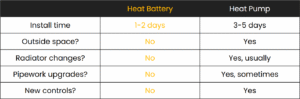
This means our installation process is basically a heating engineer & electrician removing your old boiler and connecting up the ZEB over 1-2 days – no major system overhaul required.
The main “new” element is a dedicated electrical supply from your consumer unit to the heat battery install location.
A quick route to low cost heating
“This might be faster, but don’t you end up with an expensive electricity bill?”
The biggest myth about electric heating is that it has to be expensive. Given fossil fuels are typically <10p/kWh* and electricity is >25p/kWh*, it’s completely reasonable to assume that anything other than a heat pump is going to drive up bills.
This is true for ‘direct electric’ systems without any storage or ability to use power flexibly. If you use a standard electric boiler, you’re drawing power when you need the heat; generally at the most expensive, peak times of the day.
Heat batteries like the ZEB are different.
They draw power during off-peak periods when power is cheaper, store it and then release the heat when needed. With off-peak rates as low as 7p/kWh*, heat batteries can be a lot cheaper to run than other electric heating systems.
If you’re considering a heat battery, this could mean swapping tariff or supplier to ensure you get the lowest bills possible. This is generally a quick and straightforward process with your energy supplier.
What about the upfront cost?
This is the beauty of a simple installation: fewer materials, less installation time, lower price.
In 2025, the average heat pump installation cost £13,200**. With the BUS grant applied, this gets to around £5,700 all-in.
Our ZEB costs £6,000 upfront, but the good news is that from Winter 2026, eligible homes will qualify for a £2,500 government grant! Installation costs vary depending on your home, heating system & current hot water setup so to get a specific quote for your ZEB just compete our Home Check tool below.
Is Your Home Ready?
Ready to see if you can go fossil-fuel free? Our Home Check tool is the fastest way to check if a ZEB heat battery is right for your home. It only takes 1-2 minutes to complete.
Have some questions? Please don’t hesitate to contact our team – we’re happy to help!
Sources:
*Energy unit rates quoted are estimates for illustrative purposes only and representative at the time of writing in February 2026.
**MCS (https://mcscertified.com/consumers/technologies/heat-pumps/). Last accessed 03/02/2026.