
As more UK homeowners look for ways to move away from gas, oil and LPG heating, two low-carbon heating options are becoming increasingly important: heat pumps and heat battery boilers.
Both use electricity. Both can help reduce home heating emissions. And both have a role to play in the UK’s transition to cleaner heating. But they work in very different ways.
A heat pump moves heat from outside the home into the home. A heat battery boiler, such as our ZEB, stores electricity as heat and releases it when your home needs heating and hot water.
The right choice depends on your property, your heating system, your budget, and how much disruption you are comfortable with during installation.
This guide explains the difference between a heat battery and a heat pump, where each technology works best, and what to consider if your home may not be suitable for a heat pump.
Quick comparison: heat battery vs heat pump
| Feature | Heat pump | ZEB heat battery boiler |
|---|---|---|
| How it works | Moves heat from the air, ground or water into your home. | Stores electricity as heat and releases it when needed. |
| Energy source | Electricity. | Electricity. |
| Outdoor unit | Usually required for an air source heat pump. | No outdoor unit required. |
| Indoor installation | Indoor equipment is usually required as part of the system. | Installed indoors as a boiler replacement, subject to space and access requirements. |
| Existing radiators | May need upgrading, depending on the home and required flow temperatures. | Existing radiators can often be retained, subject to a home suitability check. |
| Flow temperature | Usually works best at lower flow temperatures. | Can deliver high flow temperatures, with an output temperature range up to 80°C. |
| Installation disruption | Can involve system redesign, radiator upgrades or changes to heating controls. | Designed to be a lower-disruption alternative to replacing a fossil fuel boiler, depending on the property. |
| Day-to-day heating style | Often runs for longer periods at lower temperatures. | Designed to provide a more familiar boiler-like heating experience. |
| Efficiency and flexibility | Very efficient when designed and installed well. | Converts electricity into stored heat and is designed to optimise charging around time-of-use tariffs. |
| Storage capacity | Not applicable in the same way; heat is generated as the system runs. | Stores up to 40kWh of usable heat. |
| Best suited to | Homes suitable for low-temperature heating and an outdoor unit. | Homes where a heat pump may be difficult, disruptive or impractical. |
| Grant support | Currently eligible for Boiler Upgrade Scheme support, subject to eligibility. | Government has announced future £2,500 BUS support for heat batteries once standards are in place; tepeo is currently offering an early £2,500 grant match. |
What is a heat pump?
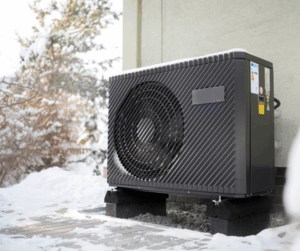
A heat pump is a low-carbon heating system that uses electricity to move heat from one place to another.
The most common type for UK homes is an air source heat pump, which takes heat from the outside air and uses it to warm your home and hot water. Ground source and water source heat pumps work in a similar way, but draw heat from the ground or water instead.
Rather than generating heat directly, a heat pump upgrades naturally occurring heat. This means a well-designed and properly installed heat pump can be very efficient.
Benefits of heat pumps
Heat pumps can be an excellent choice for many homes. They can:
- provide low-carbon heating and hot water
- reduce reliance on gas, oil or LPG
- operate very efficiently when the system is designed well
- work well with good insulation and lower-temperature heating systems
- be eligible for Boiler Upgrade Scheme support, subject to the property and installation meeting the scheme rules
Things to consider with heat pumps
Heat pumps are not right for every home or every household.
Depending on the property, a heat pump installation may require:
- suitable outdoor space for an external unit
- changes to radiators or pipework
- a heating system designed to work well at lower flow temperatures
- a more involved installation process
- changes to how the household uses heating day to day
For many homes, these changes are manageable and worthwhile. For others, they may be difficult, disruptive or expensive.
That is why it is important for homeowners to have more than one route into low-carbon heating.
Home suitability check
Find out if your home is ready for a tepeo heat battery boiler. Take our quick and easy home check to see if making the switch is the right fit for you.
Loading calculator...
What is a ZEB heat battery boiler?
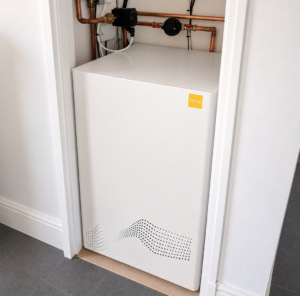
The ZEB is a heat battery boiler. It is an electric heating system that stores electricity as heat in a thermal core, then releases that heat when your home needs it.
It is designed to work with a traditional wet central heating system, such as radiators or underfloor heating.
Unlike a heat pump, the ZEB does not capture heat from the outside air, ground or water. Instead, it charges using electricity, ideally during off-peak periods when electricity can be cheaper or greener, then stores that heat for later.
Put simply, it charges like a battery and heats like a boiler.
Benefits of the ZEB heat battery boiler
The ZEB can be a good option for homes where a heat pump may be difficult to install or where homeowners want a lower-disruption way to move away from fossil fuel heating.
It can:
- provide a low-carbon electric alternative to a gas, oil or LPG boiler
- be installed indoors, with no outdoor unit or flue
- work with many existing wet central heating systems
- often avoid the need to change radiators, pipework or heating controls
- deliver high flow temperatures, similar to a traditional boiler
- charge using off-peak electricity where a suitable tariff and smart meter are in place
- provide a familiar heating experience for households used to a boiler
Things to consider with the ZEB
As with any heating system, the ZEB is not right for every home.
Important considerations include:
- The ZEB stores up to 40kWh of heat, so the home’s heat demand needs to be assessed.
- Larger or less efficient homes may need more frequent charging or may use some peak electricity.
- The ZEB works best with a smart meter and a suitable time-of-use tariff.
- It needs to be installed indoors in a suitable weatherproof space.
- It requires a solid, level surface and appropriate access for installation.
A home suitability check is the best way to understand whether the ZEB is a good fit for your property.
Installation: outdoor unit vs indoor boiler replacement
One of the biggest differences between a heat pump and a heat battery boiler is how they are installed.
A heat pump installation often involves more than replacing the boiler. The installer may need to assess the whole heating system, including radiators, pipework, insulation levels and available outdoor space.
A heat pump may be a good fit if:
- your home has suitable space for an outdoor unit
- your heating system can work well at lower flow temperatures
- you are prepared for possible radiator or pipework changes
- you are comfortable with a more involved installation process
- you want to prioritise maximum heating efficiency
A ZEB heat battery boiler may be a good fit if:
- you want a lower-disruption alternative to a fossil fuel boiler
- your home has limited or no suitable outdoor space
- you want to avoid an external unit
- changing radiators or pipework would be difficult or expensive
- your home is in a conservation area or listed building where external changes may be harder
- you want to keep a familiar central heating experience
This does not mean one option is better than the other. It means they solve different problems for different homes.
Day-to-day use and heating control
Heat pumps and heat batteries can feel different to use.
A heat pump usually works best by running at lower temperatures for longer periods. This helps the system operate efficiently and maintain a steady indoor temperature.
For some households, this feels comfortable and easy to manage. For others, it can require a change in heating habits, especially if they are used to turning a boiler on and off for shorter bursts of heat.
The ZEB is designed to feel more familiar to households used to traditional central heating.
It can:
- deliver heat when it is needed
- work with many existing thermostats and heating controls
- supply high-temperature water to radiators
- modulate heat output to match demand
- provide a more boiler-like experience
This familiarity can be important for households that want to decarbonise their heating without changing how their home feels day to day.
Efficiency, running costs and flexibility
Heat pumps and heat batteries optimise for different things.
Heat pumps are designed for high efficiency. Because they move heat rather than generate it directly, they can produce more heat energy than the electricity they use. Their performance depends on good design, suitable installation, the home’s heat demand and how the system is used.
Heat batteries work differently.
The ZEB converts electricity into stored heat. Its main advantage is not maximum efficiency in the same way as a heat pump. Instead, it focuses on:
- storing heat for later use
- charging during off-peak electricity periods
- reducing the need to use electricity at peak times
- providing predictable heat output regardless of outside temperature
- working with existing central heating systems in many homes
Running costs for either system depend on the property, tariff, installation quality and household behaviour.
A heat pump may be cheaper to run in homes where it can operate efficiently. A heat battery may be more suitable where a heat pump installation would be difficult, expensive or disruptive, especially where the household can access off-peak electricity.
The right comparison is not just efficiency. It is also suitability, comfort, installation cost, disruption, flexibility and long-term fit for the home.
Boiler Upgrade Scheme grants and tepeo’s £2,500 grant match
The Boiler Upgrade Scheme currently provides grants for eligible low-carbon heating systems, including air-to-water heat pumps, ground source heat pumps, biomass boilers and air-to-air heat pumps. Current grant categories are listed on GOV.UK and Ofgem.
The Government has also announced that it will provide £2,500 grants for heat batteries once the appropriate product, design and installation standards have been implemented.
At the moment, tepeo is offering an early £2,500 grant match on the ZEB. This is designed to help eligible customers reduce the upfront cost of switching to a heat battery boiler before Government heat battery grants become available.
Which low-carbon heating option is right for you?
The best heating system is the one that works for your home, your budget and your lifestyle.
A heat pump may be the right choice if your home is well suited to lower-temperature heating, you have space for an outdoor unit, and you are comfortable with the installation work required.
A ZEB heat battery boiler may be the right choice if you want a low-carbon alternative to a gas, oil or LPG boiler, but a heat pump is not practical for your property or would involve more disruption than you are comfortable with.
You may want to consider a ZEB if:
- your home has limited outdoor space
- you live in a flat, terrace, conservation area or listed building
- you want to keep your existing radiators where possible
- you want a heating system that feels familiar to use
- you are looking for a low-carbon heating option without an outdoor unit
- you want to make use of off-peak electricity
Every home is different. The best next step is to check whether your property is suitable. Complete our short home check.
Or speak to the tepeo team on 020 7072 5462.
The future of low-carbon heating
The UK will need a mix of clean heating technologies to move homes away from fossil fuels.
Heat pumps will be an important part of that transition. So will heat batteries and other forms of flexible electric heating.
There is no single solution that will work for every home. The UK’s housing stock is too varied, and households have different needs, budgets and preferences.
That is why choice matters.
Heat batteries like the ZEB give homeowners another route into low-carbon heating, particularly where a heat pump may not be suitable or where a lower-disruption installation is important.
The goal is not to choose one technology for every home.
The goal is to help more homes move away from fossil fuels in a way that works in the real world.
Frequently asked questions
Is a heat battery better than a heat pump?
Not necessarily. A heat pump can be a very efficient and effective option for suitable homes. A heat battery may be a better fit where a heat pump would be difficult, disruptive or expensive to install, such as homes with limited outdoor space or homes where radiator upgrades are not practical.
Is a heat battery a good alternative to a heat pump?
A heat battery can be a good alternative for households looking for low-carbon electric heating without an outdoor unit. It stores electricity as heat and releases it when needed, helping to provide a familiar central heating experience.
Does a heat battery need an outdoor unit?
No. The ZEB heat battery boiler is installed indoors and does not require an outdoor unit or flue.
Can a heat battery work with my existing radiators?
In many homes, yes. The ZEB is designed to work with traditional wet central heating systems, such as radiators or underfloor heating. Suitability depends on the property, the heating system and the home’s heat demand.
Is the ZEB heat battery boiler eligible for the Boiler Upgrade Scheme?
The Government has announced that heat batteries will be eligible for a £2,500 Boiler Upgrade Scheme grant once the relevant product, design and installation standards are in place. tepeo is currently offering an early £2,500 grant match on the ZEB.
Which is cheaper to run: a heat pump or a heat battery?
It depends on the home, tariff and installation. Heat pumps are usually more efficient because they move heat rather than generate it directly. A heat battery works differently: it stores electricity as heat and is designed to make use of off-peak or flexible tariffs. A suitability check can help you understand which option may work best for your home.
Can a heat battery replace a gas boiler?
Yes, in suitable homes, a heat battery boiler can replace a gas, oil or LPG boiler and supply a wet central heating system. The property’s heat demand, available space, access and electrical setup all need to be assessed before installation.
Is a heat battery suitable for homes without outdoor space?
A heat battery can be a good option for homes without suitable outdoor space because it does not require an outdoor unit. This may make it suitable for some flats, terraces and homes where external changes are difficult.