
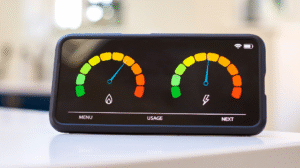
What happens when you combine electric heating, masses of energy storage and smart time-of-use tariffs?
Answer: a slam-dunk in the race to get off fossil fuel heating.
It’s called a ZEB heat battery boiler.
That said, choosing the right electricity tariff is very important.
This article outlines the options, considerations & how to pick an electric heating tariff that’s right for you.
How a ZEB Heat Battery Boiler Uses Energy
The most important thing to know is that heat batteries draw power and store it for use later on: charge like a battery, heat like a boiler.
This means they can charge up whenever electricity is cheapest or greenest (usually both – go renewables!) and still heat your home when you need it: no compromise on comfort.
There are loads of tariffs to choose from though with a range of low-prices, times of day, changes between days and a range of factors to consider.
What Are Off-Peak and Flexible Electricity Tariffs?
Traditional Off-Peak Tariffs
Traditional off-peak tariffs offer cheaper electricity during fixed overnight hours – typically late evening through to early morning.
Popular examples include Economy 7 or Economy 10, historically designed for storage heaters.
Summary for a heat battery: these tariffs are predictable, with clearly defined off-peak periods, but are sometimes more expensive than modern tariffs.
Pros:
- Fixed off-peak periods
- Relatively stable pricing (rates don’t vary daily)
- Offered by most energy suppliers
Cons:
- Pricing tends to be higher than smart, modern tariffs – particularly the peak / day rates
- Depending on the supplier, your electricity meter and house wiring you might not be able to get a E7 tariff without a meter swap and some wiring work in your home. This is particularly true if you already have a non-smart night rate meter.
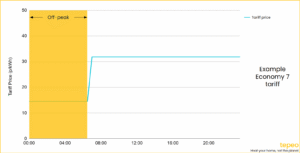
Example Economy 7 tariff
Smart “Time-Of-Use” tariffs:
These tariffs have become very popular over the last 5-10 years with solar, batteries and electric cars creating demand from customers for access to cheaper rates at different times of day.
This is reasonable. The electricity market has half-hourly pricing behind the scenes, so it makes sense for energy suppliers to pass through low-cost power when its available and peak-price power when ‘wholesale’ prices rise. Particularly for customers with smart products that can use, store and release energy to ride out the peaks!
Popular examples include Electric Vehicle tariffs (like E.On Next Drive)
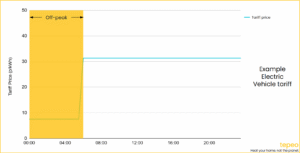
Example Electric Vehicle tariff
Battery & Solar tariffs (like Octopus Flux)
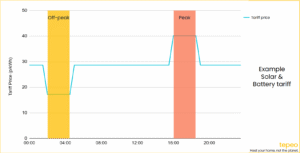
Example Solar & Battery tariff
Electric Heating or Heat Pump tariffs (like British Gas Heat Power)
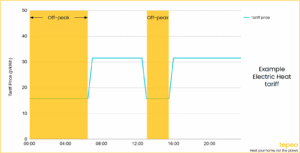
Example Electric Heating tariff
Summary for a heat battery: smart tariffs come in several forms. You might need an EV or home battery to qualify for those tariffs. If you use a lot of heating and might need to charge your ZEB several times, a tariff with multiple off-peak periods could be beneficial. One caveat here is that (generally) the more off-peak periods available, the higher the price of these periods vs one cheap block at night.
Pros:
- Prices can be very low – particularly for overnight EV tariffs
- The range of tariffs is growing every year so swapping for a better deal is becoming easier
- Many suppliers now have multiple off-peak tariffs – helpful if you might need to charge up more than once overnight for much of the year
Cons:
- Peak prices can be very high – you need to be able to move your electricity consumption and, ideally, not just for the ZEB
- Prices can change year-to-year and there is no guarantee that off-peak rates stay the same, or the same relative to flat rate tariffs
Dynamic tariffs
Dynamic tariffs go a step further. Instead of fixed cheap hours, electricity prices change dynamically, sometimes half-hourly, based on grid demand.
Every day is different & when the wind is blowing (generally) power is cheap, when its not its much more expensive.
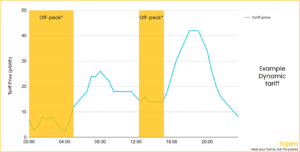
Example day from a dynamic tariff.
*off-peak is just illustrating a relatively low price period in this example. Because these tariffs are dynamic there may not be a fixed off-peak period.
Summary for a heat battery: dynamic tariffs have huge potential – they match pricing and carbon really well and can provide loads of opportunities to charge up a heat battery at low prices. But… the price varies a lot and some days of the year will be very expensive. Ultimately this is a risk-based decision and we can’t give a definitive “good” vs “bad” for dynamic tariffs.
Pros:
- Prices can be very low – sometimes negative and you’ll get paid to heat your home!
- Off-peak periods are often scattered through the day, so your ZEB will have several opportunities to charge
- The ZEB automatically gets half-hourly pricing from Octopus for their Agile tariff, so we’ll take care of hunting the lowest cost power
Cons:
- Peak prices can be very high and when there are low-wind and low-solar periods, this can persist for whole days or weeks. It can be very difficult to avoid expensive heating bills when this happens
- You need to be able to shift other electricity demand too – the ZEB will be a large part of your total consumption, but hot water and other household use should be flexible to avoid peak prices (or a home battery which can do this for you too)
What to Look for When Choosing a Tariff for Your ZEB
When selecting an electric heating tariff for your ZEB, consider:
- Length and timing of off-peak periods
Longer off-peak windows allow your heat battery to build up a store of heat. 4-5 hours will get your ZEB full from empty. In someways having 7 hours in more long stretch with Economy 7 isn’t ideal as you might not be able to use some of that time if the ZEB is already full.
- Price difference between peak and off-peak rates
The larger the gap, the more you save by shifting electricity usage. Equally the off-peak rates need to be reasonable for your overall bill. - Standing charge & other contract terms
Some tariffs carry higher standing charges (the daily fix cost to provide power, regardless of how much power). There are also contract terms and exit fees to be aware of.
Will off-peak tariffs / prices last?
Many people wonder if the uptake in electric vehicles, batteries and solutions like the ZEB will lead to off-peak becoming peak – or at least that prices will converge.
This misses the fact that we are building tonnes of intermittent renewable generation at the same time. The value of being able to draw power when electricity supply is high (or put another way – lower prices resulting from lots of generation) is likely to continue for decades.
Indeed, the value of ‘flexibility’ is increasing in the UK as the need for fast-acting devices, localised flexibility, and national balancing continues to grow. In the future, we could see heat batteries selling this flexibility, creating extra value for our customers over time!

The Bottom Line
A ZEB heat battery boiler is most cost-effective when paired with the right electricity tariff. Choosing the right off-peak or flexible tariff allows you to:
- Reduce energy bills
- Harmonise how multiple electric solutions work in your home
- Support a cleaner, greener electricity grid
Ready to see if you can go fossil-fuel free? Our Home Check tool is the fastest way to check if a ZEB heat battery is right for your home. It only takes 1-2 minutes to complete.
Have some questions? Please don’t hesitate to contact our team – we’re happy to help!