
Quick summary: the switch at a glance
The property: 1980s semi-detached home in suburban Reading.
The problem: Tim wanted to move away from his gas boiler, but a heat pump would have meant giving up garden space and replacing microbore pipework.
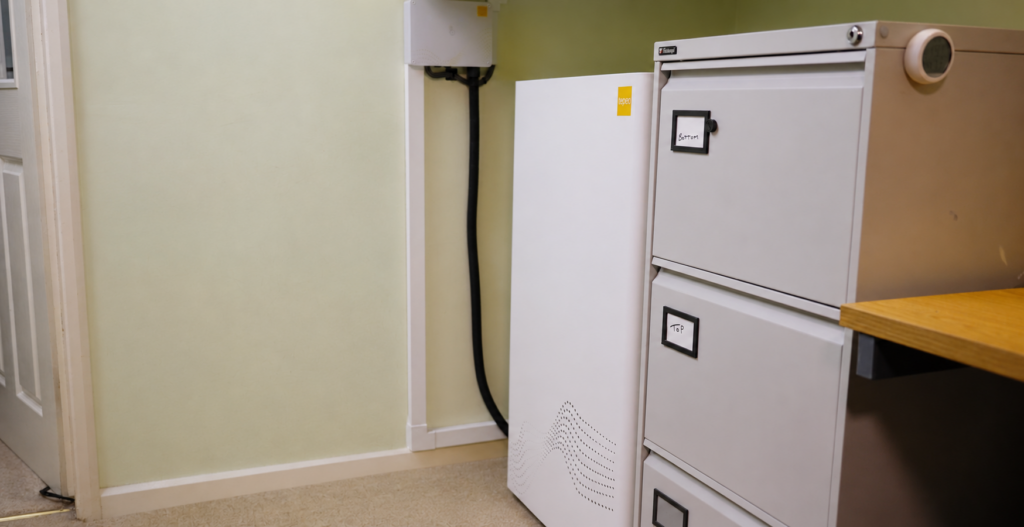
The solution: The tepeo ZEB heat battery boiler, installed indoors and connected to the home’s existing wet central heating system.
The result: A lower-disruption switch away from gas, with heating bills roughly the same as before.
The challenge: finding the right final step
Tim had already made big changes to electrify his home. The one thing still using fossil fuels was his gas boiler.
It was still working, but Tim wanted to move away from gas and reduce the carbon footprint of his home. As someone interested in home energy technology, he was already keeping a close eye on how his house produced, stored and used electricity.
At first, a heat pump seemed like the obvious low-carbon heating option. But once Tim looked into it properly, it became clear that it would not be a simple fit for his home.
The main challenges were space and pipework. As a 1980s semi-detached property, the home had limited garden space for an outdoor unit. It also had microbore pipework, which installers advised would need replacing for a heat pump system. One installer estimated the work would cost around £20,000.
Tim wanted to reduce his carbon footprint, but not at the cost of major disruption, lost garden space and a large heating system overhaul while his existing gas boiler was still working.
He needed another route away from gas.
Discovering the tepeo ZEB
Tim came across the tepeo ZEB while watching Fully Charged/Everything Electric on YouTube.
The idea made sense: a heat battery boiler that could replace a fossil fuel boiler, store energy as heat, and work with the home’s existing wet central heating system.
For Tim, the appeal was practical.
The ZEB offered a way to move away from gas without the same level of retrofit work he had been quoted for a heat pump. It could be installed indoors, connected to his existing heating system, and used with a smart electricity tariff to help make better use of cheaper off-peak electricity.
The fact that tepeo was based nearby in Reading also helped make the technology feel closer to home.
A lower-disruption installation
Tim became one of tepeo’s early ZEB customers, with his installation taking place in February 2021.
Unlike the heat pump route he had explored, the ZEB installation did not require replacing the home’s microbore pipework. Instead, the system was brought into the home, connected to the plumbing, and set up to provide central heating.
As Tim put it:
“They wheeled it in, plonked it down, plugged it in, did the plumbing and it worked.”
For a homeowner looking to decarbonise without turning the house upside down, that simplicity mattered.
The result: familiar heating, without the gas
Since switching from gas to the ZEB, Tim says his bills are roughly the same as they were before.
For him, the benefit was not just about cost. It was about completing the next stage of an electric home and moving away from burning gas for heating. With two young children, Tim was keen to create a better world for them and the next generation.
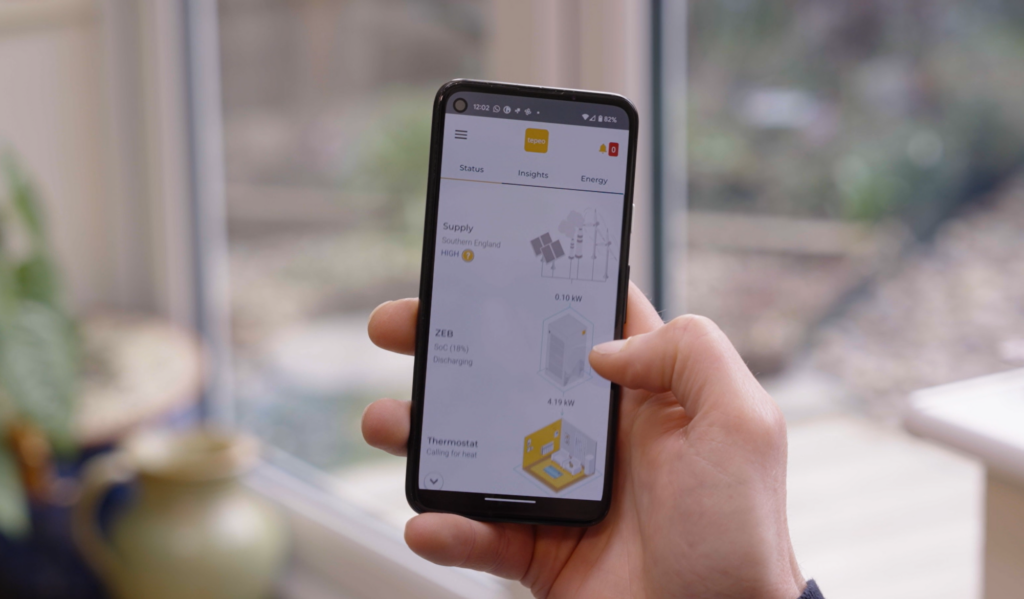
The ZEB fits into a wider home energy setup that already includes solar panels, battery storage and an electric car. It uses smart charging to plan when to charge based on factors such as the weather and the home’s heating needs.
That means heat can be stored when electricity is cheaper or lower carbon, then released through the home’s central heating when warmth is needed.
Why the ZEB worked for Tim’s home
Tim’s story is a good example of why clean heating needs more than one option.
For many homes, heat pumps can be an excellent low-carbon heating solution. But not every property is ready for that kind of installation, and not every homeowner wants the space, disruption or system changes involved.
For Tim, the ZEB offered a practical alternative.
It allowed him to:
- move away from gas
- avoid giving up garden space
- keep his existing wet central heating system
- avoid replacing microbore pipework
- make use of a smart electricity tariff
- complete more of his home’s shift to electric living
- keep heating bills roughly the same as before
It was not about choosing technology for the sake of it. It was about finding the right solution for the home.
A better boiler for a world without gas
Replacing a working gas boiler is a big decision.
For Tim, the ZEB made that decision easier by offering a lower-disruption route away from fossil fuel heating. His story shows that the path to cleaner heating does not have to look the same for every home.
Some households will choose a heat pump. Some will connect to a heat network. Others, like Tim, may need a different route.
The important thing is having practical choices that help more homes move away from gas.
FAQs
Can you replace a gas boiler with a heat battery boiler?
Yes, in suitable homes. A heat battery boiler can replace a fossil fuel boiler and connect to an existing wet central heating system, such as radiators or underfloor heating. A home assessment is needed to confirm suitability.
Is a heat battery boiler a good alternative to a heat pump?
It depends on the home. Heat pumps are a strong option for many properties, but some homes face challenges such as outdoor space, pipework, radiator sizing or installation disruption. In suitable homes, a heat battery boiler can offer another low-carbon route away from gas.
Does the tepeo ZEB work with existing radiators?
The ZEB is designed to work with wet central heating systems in suitable homes. That can include existing radiators, depending on the property and heating requirements.
Does the ZEB need an outdoor unit?
No. The ZEB is installed indoors, so it does not need an outdoor unit.
Can the ZEB use off-peak electricity?
Yes. The ZEB uses smart charging to help make better use of suitable off-peak electricity tariffs, storing energy as heat and releasing it when the home needs warmth.