Quick Summary: The Switch at a Glance
The Property: Three-bedroom semi-detached house with a utility room and garden office.
The Homeowners: Damian, Rachel and Murphy the cat.
The Problem: An unreliable oil boiler, an oil tank that blocked natural light and no practical space to relocate it.
The Alternatives Considered: A gas combi boiler and an air source heat pump.
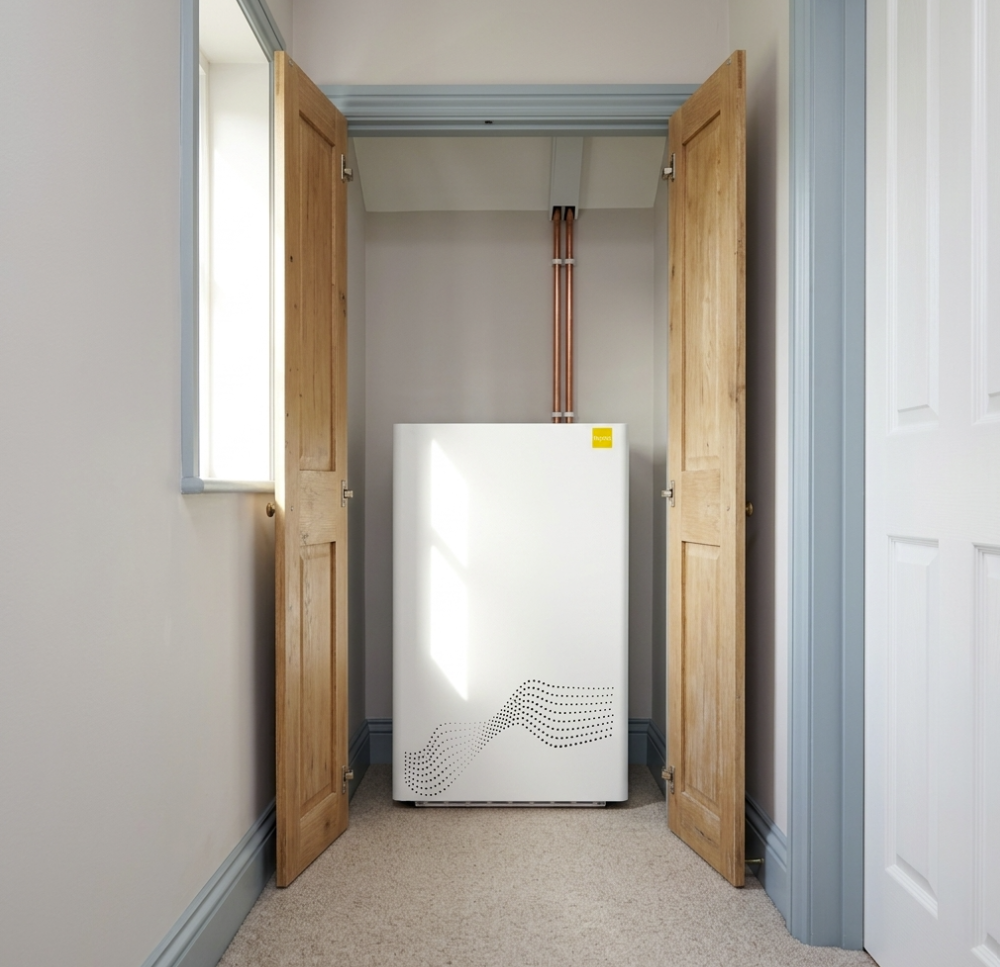
The Solution: The tepeo ZEB — a heat battery boiler installed by Leaping Hare Renewables and connected to the home’s existing radiators and pipework.
The Installation: Completed in two days with minimal disruption.
The Results: No more oil tank or oil smell, quieter heating and, after moving to a suitable off-peak electricity tariff, lower heating costs than their previous oil system.

The Challenge: An Unreliable Oil Boiler and an Impractical Tank
When Damian and Rachel moved into their three-bedroom semi-detached home, it was heated by an ageing oil boiler.
Over time, the system became increasingly unreliable and failed on several occasions. The oil tank also caused daily frustration. Positioned directly outside the utility room, it blocked natural light and left a faint smell of oil around the house.
There was a bigger practical problem too: the tank’s location no longer met current building requirements. Relocating it would have been difficult because there was very little suitable space available in the garden.
The couple knew they would eventually need to replace the system.
“We knew it was only a matter of time before the boiler failed completely,” Damian recalls. “When it finally gave out, it forced us to take action.”
Alongside the practical issues, Damian and Rachel wanted to reduce their reliance on fossil fuels and find a lower-carbon way to heat their home.
The Solution: Discovering the tepeo ZEB
While researching heating technologies through the Octopus Energy website, Damian discovered the tepeo ZEB.
The ZEB is a heat battery boiler. It uses electricity to store energy as heat, then releases that heat through a home’s wet central heating system when it is needed.
For Damian and Rachel, it offered several important advantages:
- no outdoor unit
- no need for an oil tank
- compatibility with their existing radiators and pipework
- a lower-disruption installation
- no fossil fuels burned in the home
- smart charging using suitable off-peak electricity periods
“Once we started learning more about the ZEB, it felt like the perfect fit,” Damian says. “It was a quick and non-disruptive installation, and it worked with our existing radiators and pipework.”
After speaking with local tepeoPRO installer Leaping Hare Renewables, the couple decided to make the switch.
The Installation: Completed in Two Days
The old oil boiler was removed and the ZEB was connected to the home’s existing central heating system.
The full installation was completed in two days.
Damian initially had some concerns about the weight of the ZEB because the utility room had a raised floor. The installers addressed this by fitting a reinforced floor panel that spread the load and provided a stable base for the unit.
“The installers were fantastic — efficient, tidy and professional,” Rachel recalls. “They even capped the old boiler’s flue and fixed the wall. We really couldn’t have asked for a smoother experience.”
Removing the oil system also meant the outdoor tank was no longer needed.
That brought several immediate improvements:
- more natural light into the utility room
- no lingering oil smell
- more usable outdoor space
- a quieter heating system
- no need to find a compliant new location for the tank
For a household heading into winter, completing the work within two days was a major relief.
The Result: Lower-Carbon Heating with Familiar Radiators
The ZEB allowed Damian and Rachel to move away from oil without replacing their existing radiators and pipework.
Day to day, their home continued to be heated through the familiar wet central heating system. Behind the scenes, the ZEB stores heat using electricity and releases it when the heating is required.
Because it does not burn oil, gas or LPG, the ZEB produces no carbon emissions at the point of use.
“Switching to the ZEB was one of the best decisions we’ve made,” Damian says. “It’s quieter, cleaner and fits seamlessly into our lives.”
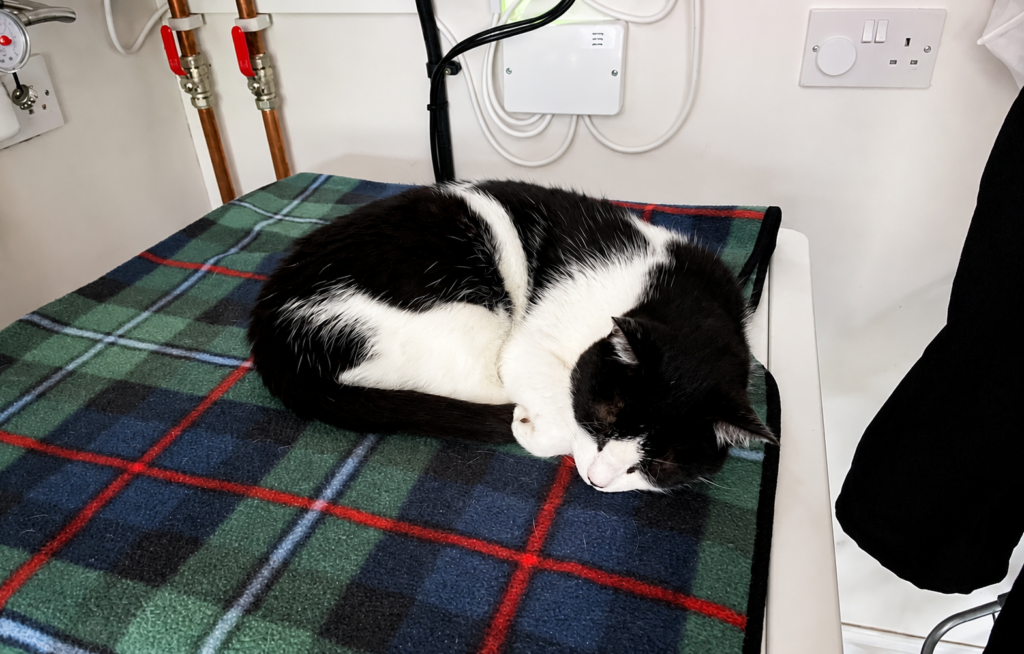
Murphy appears happy with the result too.
Why the Electricity Tariff Made a Difference
One of the most important lessons from Damian and Rachel’s experience was the value of choosing an appropriate electricity tariff.
During their first winter, before moving to a suitable smart tariff, their electricity costs were higher than expected.
After switching to an electricity tariff with cheaper off-peak periods, their costs reduced significantly.
Damian estimates that their total winter electricity bill is now around £250 a month. This includes all household electricity use—not only heating and hot water.
By comparison, they previously spent around £250 a month on oil for heating and hot water alone.
This is their individual experience and should not be treated as a guaranteed saving for every home. Heating costs vary according to:
- the property’s heat demand
- insulation and heat loss
- household energy use
- electricity tariff
- weather
- preferred indoor temperature
- how the system is operated
The right tariff is therefore an important part of getting the best from a heat battery boiler.
How the ZEB Fits with Their Solar Panels and Home Battery
Damian and Rachel already had solar panels and a home battery as part of their wider move towards lower-carbon living.
Their solar panels contribute to the home’s overall electricity use, particularly during brighter months. They can also export unused electricity to the grid, helping to generate credits that contribute towards household energy costs.
The ZEB does not currently include a dedicated feature that charges it only from excess solar generation. Its Smart Charging system instead plans charging around factors such as the home’s expected heat demand, the weather and the selected electricity tariff.
Together, the technologies have helped Damian and Rachel reduce their overall reliance on fossil fuels and manage more of their home energy through electricity.
Why the ZEB Suited Their Home
Low-Disruption Installation
The ZEB connected to the existing wet central heating system, avoiding a wider heating-system replacement.
No Outdoor Unit
This removed the planning and positioning concerns Damian and Rachel encountered when considering a heat pump.
No Oil Tank
Removing the tank restored natural light, eliminated the oil smell and freed up outdoor space.
Familiar Heating
The couple continued using their existing radiators and central heating controls.
Quieter Operation
The ZEB was noticeably quieter than their old oil system.
No Combustion in the Home
Because the ZEB does not burn fuel, it does not produce carbon monoxide at the point of use.
Smart Charging
The system can schedule charging around suitable off-peak electricity periods, expected weather and the home’s heating requirements.
A Practical Alternative to Oil Heating
Damian and Rachel’s experience shows why different homes need different low-carbon heating choices.
For some properties, a heat pump will be the right solution. For others, practical challenges such as outdoor space, planning, required modifications or installation timescales may make another technology more appropriate.
In this home, the ZEB provided a route away from oil that:
- worked with the existing central heating system
- required no outdoor heating unit
- could be installed quickly
- removed the need for an oil tank
- supported the couple’s environmental goals
The ZEB will not be suitable for every property, which is why a home check and detailed survey are required before installation.
Want to Learn More Before Replacing Your Oil Boiler?
Choosing a new heating system is a significant decision.
The free Better Boiler Guide provides a straightforward comparison of heat pumps, heat battery boilers, direct electric boilers and traditional gas boilers. It covers installation, day-to-day use, running-cost factors and the types of homes each option may suit.
Already considering a heat battery boiler?
Complete the free home check and share a few details about your property, current heating and energy use. A member of tepeo’s UK-based team can then discuss your requirements and whether the ZEB could be a suitable option.