
How Dan replaced his oil boiler with a tepeo ZEB heat battery boiler, moved away from kerosene deliveries and made exceptionally effective use of low-cost peak electricity.
The home: a two-bedroom terraced house in Kent, previously heated by an oil boiler connected to a large heating oil tank in the garden.
The homeowner: Dan, who had wanted to move away from oil heating for some time but found an air source heat pump difficult to accommodate because of the available outdoor space.
The solution: The tepeo ZEB heat battery boiler, installed in 2023 and used with Good Energy’s EV Charge tariff to make the most of low cost off-peak electricity.
Looking for an alternative to oil heating
Before the ZEB, Dan’s home was heated by an oil boiler connected to a large heating oil tank in the garden.
He had wanted to get away from oil for a long time. There was the environmental impact, of course, but also the day-to-day hassle that comes with it: watching the tank level, arranging deliveries and hoping you don’t run out just when you need heating the most.
Dan looked into an air source heat pump, but his outdoor space was limited, making it tricky to accommodate.
That’s when the ZEB started to make sense.
“I had been wanting to move away from oil for a long time, but an air source heat pump was tricky given the context of the outside space. The ZEB fit the requirement perfectly.”
The ZEB gave Dan another way to move to low-carbon heating without needing an outdoor unit and while keeping the familiar central heating in his home.
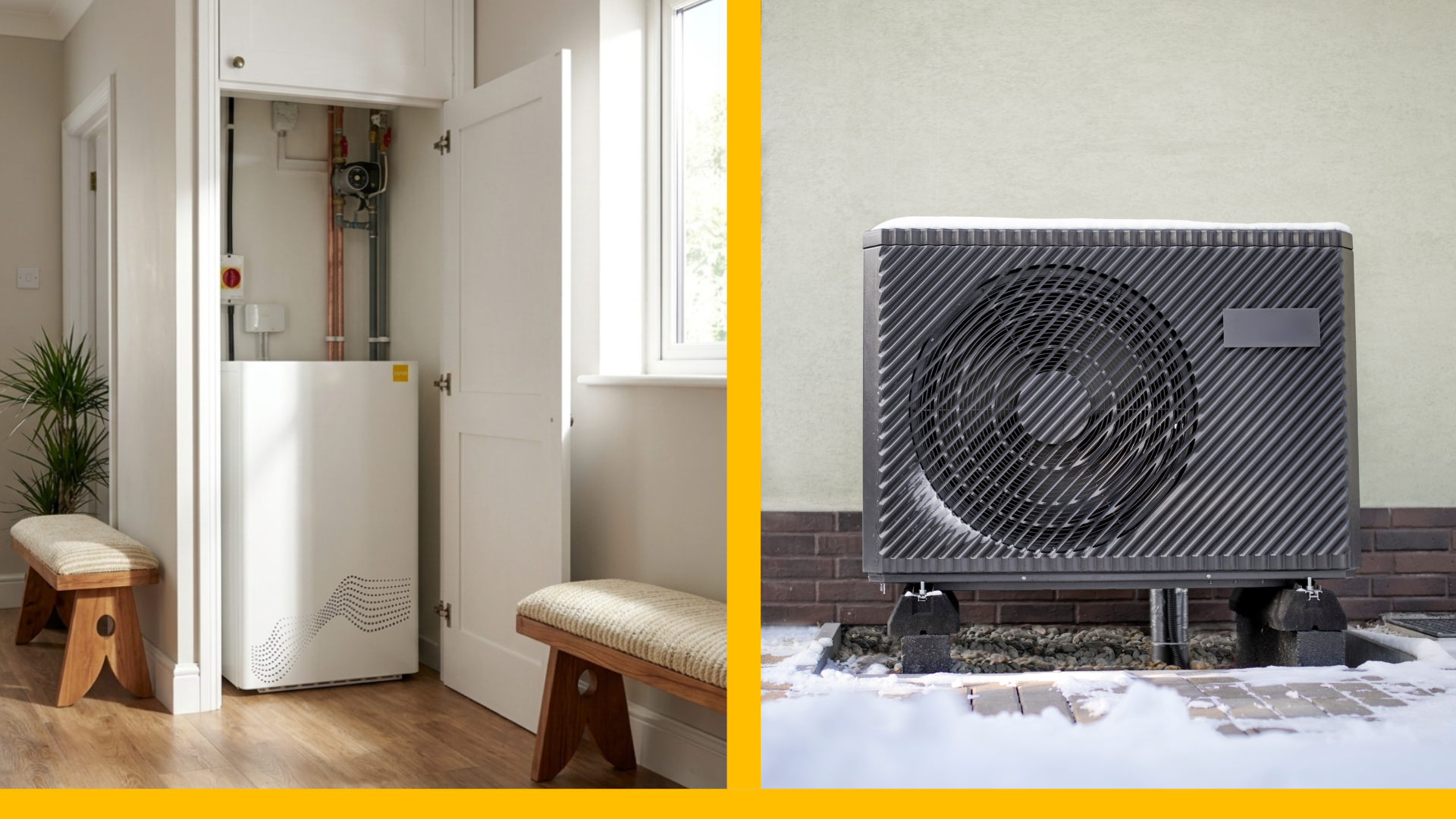
Heat pump vs heat battery boiler: which is right for you?
This guide explains the difference between a heat battery and a heat pump, where each technology works best, and what to consider if your home may not be suitable for a heat pump.
Getting to know his ZEB
Dan has now been living with his ZEB since 2023, so has had plenty of time to work out what suits his home best.
“Initially, I engaged with the tepeo app frequently testing out different flow temperatures and charge durations. However, now I tend to use it most around the turn of the seasons when more or less charge is needed.”
Smart Charging does much of the planning in the background, using machine learning to look at things such as expected heating demand, local weather and the electricity tariff to work out how much energy needs to be stored. Dan can input his tariff, which is the Good Energy EV Charge tariff, so that the ZEB charges when electricity is cheapest.
And as the weather changes, the ZEB can adapt how much it needs to charge rather than simply filling up the same amount every day. And in Dan’s home, that combination has worked particularly well.
Heat battery running costs in a real home
Dan was one of the homeowners who took part in additional monitoring to demonstrate the real-world performance of heat batteries, meaning we have detailed data showing how his ZEB has been operating.
From August 2025 to July 2026, Dan’s ZEB used 3,652 kWh of electricity, costing £226.41 on his Good Energy EV Charge tariff.
That means the average price paid for electricity used by his ZEB was just 6.35p/kWh.
For comparison, the average rate available across his tariff during the same period was 23.21p/kWh, while its cheapest rate was 5.3p/kWh.
Dan’s ZEB performance at a glance
August 2025 – July 2026
£226.41: total ZEB charging cost during the period.
6.35p/kWh: average price paid for electricity used by the ZEB.
23.21pkWh: average tariff price across the same period
5.3p/kWh: cheapest available tariff rate
Of course, Dan’s results are specific to his home, tariff and the way he uses his heating. But they’re a great real-world example of what thermal storage can make possible.
Dan’s ZEB charges mostly during cheap off-peak hours, storing energy as heat to deliver warmth on demand throughout the day.
Want to see how much you could save?
Try our Cost and Carbon Calculator to see how much you could save your wallet, as well as the planet, by switching to the ZEB.
Spending considerably less than he did on his oil boiler
Before switching to the ZEB, Dan estimates that a year of oil heating cost him around £600 at 2021 oil prices – and even then, he was fairly careful with how much he used because he was conscious of running short before another delivery.
Since moving to the ZEB, his experience has been very different.
“I’m spending considerably less on heating than I was when reliant on oil, and I’m not running the risk of fluctuating oil prices as demand shifts throughout the year.”
From January to August 2026, Dan’s total off-peak electricity spend was £210.37, with what he describes as the very significant majority of that going to the ZEB.
That isn’t a direct comparison with his previous £600 annual oil bill – energy prices have changed, the periods are different and Dan sometimes uses a log burner too – but it gives another useful glimpse into how his current setup is working in practice.
Heating the way he likes to
The ZEB is Dan’s main heating system, but on particularly cold winter days he’ll sometimes light his highly efficient log burner too.
For Dan, that’s predominantly about enjoying the atmosphere and comfort of having a fire going in winter, rather than the ZEB needing help to heat the house.
“I use the ZEB in tandem with a highly efficient log burner for very cold temperatures (e.g. January), but I do think that the ZEB could handle it if required.”
His hot water routine has evolved over the years, too. Last summer, Dan used the immersion heater on his hot water tank rather than the ZEB, while this year he chose to continue with the ZEB instead.
It’s one of the nice things about hearing from someone who has lived with the system for several years: Dan has been able to experiment, learn what suits his home, and make small changes through the seasons as he likes.
Despite all of that tinkering, when we asked whether he’d actually had to change his everyday habits since getting the ZEB, he answered “No, all the same!”.
A handy bonus in the utility room
Dan also has one particularly good tip for anyone thinking about where to install their ZEB.
His ZEB is installed in his utility room, and the small amount of heat given off by the unit has turned out to be rather useful during winter.
“Think about how you can locate the ZEB to make the best use of the radiant heat when it’s charged up. I’ve installed mine in the utility room and it’s made the space excellent for drying clothes in the winter.”
Goodbye oil deliveries and tank worries
For Dan, though, the biggest change is much simpler: he doesn’t have to think about oil anymore.
“The ZEB has been a relief compared to living with an oil boiler – no more being worried about running out before I can get another delivery, no more worrying about kerosene spills and no more worrying about emissions.”
Several years after making the switch, those are still some of the things Dan values most.
And when he has needed us along the way, when he’s had questions?
“The tepeo team is great, always helpful and friendly.”
The result: a smarter alternative to oil heating
Dan wanted to move away from oil, but an air source heat pump wasn’t an easy fit for his property.
The ZEB gave him another option – and several years later, the combination of a heat battery boiler and a well-suited off-peak electricity tariff is working effectively in his home.
His latest monitored data shows an average ZEB charging cost of 6.35p/kWh, while Dan himself says he is spending considerably less on heating than he did when he relied on oil.
But perhaps the biggest difference is the one that’s harder to put into a spreadsheet: his heating is no longer something that comes with a heap of worry.
Looking for an alternative to your oil boiler?
If you currently heat your home with oil and are considering an oil boiler replacement, a heat battery boiler could be another option worth exploring.
For many rural and off-gas homes, the choice can feel limited. Large parts of the UK still rely on oil or LPG for heating, and rising fuel costs, deliveries and fuel storage can all make homeowners start looking for something different.
It’s a topic that recently received BBC coverage when tepeo customers, Anna and Gary, were featured alongside local MP Freddie van Mierlo.
Many homes in their area are not connected to the gas grid and rely on oil or LPG instead. Anna and Gary chose a ZEB and told the BBC they felt they were saving money compared with some of their neighbours, while also moving away from fossil fuels.
But helping more homes make that switch means giving people practical choices.
Heat pumps can be a brilliant low-carbon heating solution for many properties, but what about the homes they’re not right for? Depending on the property, installation can involve an outdoor unit, changes to radiators or pipework, and a wider retrofit that someone replacing a traditional boiler may be expecting.
That challenge is a big part of why tepeo developed the ZEB: to create another efficient way for households to move away from fossil-fuel heating. A heat battery boiler is installed indoors and can work with suitable existing wet central heating, helping make the move to smart electric heating more achievable for homes where a heat pump may not be suitable.
Dan’s story is a great example of how a low-carbon heating alternative can work not just in theory, but in a real home. He wanted to leave oil behind, a heat pump was difficult to accommodate, and several years later his ZEB is giving him a practical, flexible way to heat his home with electricity instead.