

The UK is experiencing a heatwave serious enough to close schools, disrupt transport and place additional pressure on hospitals and essential services.
On 24 June, Gosport provisionally recorded 36.1°C – the highest ever June temperature measured in the UK. The Met Office has been unambiguous about the context: human-induced climate change is making extreme heat more likely and more intense.
It would be glib to use a dangerous heatwave as a marketing opportunity. But it would be equally evasive to treat it as an isolated weather event, disconnected from the energy choices that continue to drive emissions.
This summer is a reminder that climate change is no longer something we can discuss only through distant targets or future scenarios. It is already shaping public health, infrastructure, education, water use and the conditions inside our homes. And the risk is accelerating.
The UK has already exceeded 40°C once. The Met Office now estimates a 50% chance of doing so again within the next 12 years, while modelling a future event comparable with the 1976 heatwave produces plausible temperatures of around 45°C by the 2050s.
That is not a forecast that every summer will look like this. It is evidence that the range of possible British weather is shifting.
Reducing emissions is therefore not an abstract obligation to future generations. It is a practical response to the conditions in which we are beginning to live.
For the UK, electrification is also about security and affordability
European Commissioner for Energy and Housing Dan Jørgensen has argued that Europe should become an “electro-continent”: electrifying transport, industry and heating while expanding renewable generation, energy storage, stronger grids and cross-border connections.
That ambition matters just as much to the UK.
Our energy system remains closely connected to European and international markets. Domestic oil and gas production does not insulate households from global price movements, because the prices paid in Britain are still influenced by international wholesale markets.
Russia’s invasion of Ukraine showed how quickly a disruption to fossil-fuel supplies can feed through into UK energy bills. More recently, instability around the Strait of Hormuz has provided another reminder of the risks. Iran’s ability to restrict shipping through one of the world’s most important oil and gas routes has repeatedly unsettled global markets.
The wider point is not about any one country or conflict. It is that continued reliance on internationally traded fossil fuels leaves the UK exposed to geopolitical tension, disrupted shipping, insurance costs and recurring price shocks.
The UK has significant renewable-energy resources, particularly offshore wind. Making better use of them will require faster grid expansion, more storage, flexible technologies and continued electricity interconnection with neighbouring countries. Interconnectors allow the UK to import electricity when needed, export surplus renewable generation and share capacity across a wider energy system.
Electrifying more of our heating and transport can therefore support three connected goals:
- reducing carbon emissions
- strengthening the UK’s energy security
- protecting households from some of the volatility associated with imported fossil fuels
Electrification will not remove every cost or energy-security challenge. But building an energy system around domestically generated, increasingly renewable electricity gives the UK greater control than remaining dependent on volatile global fuel markets.
Home heating sits at the centre of this transition
Heating the UK’s 28 million homes accounted for around 18% of national greenhouse gas emissions in 2021, with natural gas combustion the principal source.
In England, 86% of households still use gas-fired main heating, while a further 3% rely on oil or solid fuels.
Home heating is therefore not a peripheral part of the net-zero challenge. It is one of its central unresolved questions.
The difficulty is that boilers remain largely invisible in public debate until they fail. Solar panels, electric vehicles and wind turbines are visible symbols of transition. The heating system sits quietly in a cupboard, sometimes for 15 years or more.
That makes each replacement decision consequential.
Installing another fossil-fuel boiler may feel like the simplest and cost effective short-term choice, but it can lock a household into further years of combustion, exposure to volatile fuel prices and eventual replacement as policy and infrastructure continue to move towards electrification.
Decarbonising heat requires more than one technology
Decarbonising home heating will not be achieved through a single technology. Britain’s housing stock is simply too varied. Homes differ in size, construction, heat demand, available space, existing pipework and the level of disruption an installation may involve. What works well in a detached house may be far less practical in a small terrace or flat.
Heat pumps will suit many properties, while direct electric heating may remain appropriate in some circumstances. Heat battery boilers provide another route, particularly for smaller homes or properties without suitable outdoor space. They can work with an existing wet central-heating system and use smart charging to store electricity as heat when tariffs may be lower, ready for use when the home needs it.
The objective should not be to promote one technology at the expense of another. It should be to ensure households can choose the most appropriate low-carbon solution for their property.
But providing a range of technologies is only part of the answer. Those options must also be affordable.
Making low-carbon heating more affordable
Households should not have to face a significant financial penalty for choosing to reduce their carbon emissions. The transition away from fossil-fuel heating will only succeed if appropriate low-carbon technologies are available at a realistic cost.
Government support has already made some options more accessible. Heat batteries are expected to become eligible for £2,500 grants through the Boiler Upgrade Scheme from 2026/27, once the necessary standards and scheme arrangements are in place.
To help suitable households make the switch to low-carbon heating sooner, tepeo is currently offering that £2,500 today as part of its Early Grant Match. It reflects the level of support planned under the expanded scheme, without requiring customers to wait for future policy changes.
A successful transition will depend on both choice and affordability: giving households access to a suitable low-carbon heating system at a price that makes switching possible.
[Download the better boiler guide]
Electrification has to be intelligent, not simply additional
Moving heating from fossil fuels to electricity is only part of the transition. When electricity is used matters too.
A power system with growing volumes of wind and solar generation needs flexibility: technologies capable of shifting demand away from constrained periods and towards times when electricity is cheaper, cleaner or more abundant.
The tepeo heat battery boiler, for example, separates the time at which electricity is consumed from the time at which heat is delivered.
It can store heat during suitable off-peak periods, then release it later through the home’s radiators or underfloor heating. Smart Charging continually considers the electricity tariff, local weather forecast and expected household demand.
That is valuable to the homeowner, but it also has system-level significance.
As transport and heating electrify, millions of flexible devices will be able to reduce pressure at peak times and absorb more renewable generation when it is available.
The transition is not simply from one fuel to another. It is from a largely inflexible, combustion-based system to one that is increasingly electric, distributed and responsive.
A boiler decision is also an energy-system decision
Replacing a boiler is a private household purchase, but its effects are not entirely private.
Every home that moves away from burning gas, oil or LPG reduces fossil-fuel demand.
Every flexible heating system adds capacity to use electricity more intelligently.
Every customer who chooses an electric alternative contributes, in a small but real way, to a cleaner and more resilient energy system.
No individual household can solve climate change or energy insecurity.
But neither can either problem be solved without millions of individual assets, buildings and purchasing decisions changing over time.
What could switching mean for cost and carbon?
There is no universal answer. The financial and environmental impact will depend on the heating system being replaced, the property’s heat demand, the available electricity tariff, insulation, weather and household behaviour.
That is why broad claims about saving money or carbon are less useful than modelling a specific home.
The examples below are illustrative outputs from the tepeo Cost & Carbon Calculator, using a 7 hour off-peak tariff:
| Current system and annual use | Estimated current annual cost | Estimated ZEB annual cost | Estimated annual cost difference | Estimated carbon saving this year | Estimated annual carbon saving by 2035 |
|---|---|---|---|---|---|
| Mains gas, 8,000kWh | £656–£724 | £647–£725 | About the same | 616kgCO₂ | 1,463kgCO₂ |
| Heating oil, 700 litres | £906–£1,039 | £586–£658 | Around £351 lower | 782kgCO₂ | 1,546kgCO₂ |
| Direct electric, 10,000kWh | £2,498–£2,637 | £1,077–£1,201 | Around £1,428 lower | 251kgCO₂ | 924kgCO₂ |
These figures are examples rather than guaranteed outcomes. Both cost and carbon savings will vary according to the property, tariff, energy use and the assumptions used by the calculator.
To put those carbon savings into more familiar terms, the calculator estimates that:
- 616kgCO₂, for the mains-gas example, is comparable to the emissions from driving a petrol car around 2,678 miles, producing approximately 308 beef steaks, or the annual carbon absorption of around 25 large trees.
- 782kgCO₂, for the heating-oil example, is comparable to approximately 3,399 petrol-car miles, 391 beef steaks, or the annual carbon absorption of around 31 large trees.
- 251kgCO₂, for the direct-electric example, is comparable to approximately 1,091 petrol-car miles, 126 beef steaks, or the annual carbon absorption of around 10 large trees.
These comparisons are illustrative, but they help show that even a few hundred kilograms of carbon represents a meaningful reduction. The estimated benefit becomes greater by 2035 as the UK electricity grid continues to incorporate more renewable energy.
For a gas-heated home, the estimated annual running cost may remain broadly similar, but the carbon benefit can still be substantial. In this example, switching could avoid approximately 616kgCO₂ this year, rising to an estimated 1,463kgCO₂ a year by 2035.
For homes using heating oil, the example shows both a financial and environmental benefit: an estimated annual saving of around £351 alongside a carbon reduction of approximately 782kgCO₂ this year.
The potential financial saving is particularly significant for homes using standard direct electric heating. In the example above, estimated annual costs fall by around £1,428, while smart charging also reduces the carbon associated with when electricity is drawn from the grid.
The estimated carbon benefit increases towards 2035 because the UK electricity system is expected to become progressively cleaner. As more renewable generation is added to the grid, electrically powered heating can continue to reduce its carbon impact, while gas and oil systems will still produce emissions whenever fuel is burned.
The most useful next step is to model your own home rather than rely on an average.

The £2,500 tepeo Early Grant Match
Households should not have to wait for future policy before moving away from fossil fuels.
tepeo is currently offering eligible customers a £2,500 Early Grant Match, reflecting the level of support planned for heat batteries under the expanded Boiler Upgrade Scheme.
For a typical installation costing around £8,500, that can reduce the price to approximately £6,000, although the final cost depends on the property, survey and work required.
The saving is subject to eligibility and the applicable offer terms. Check whether your home is suitable today.
Spreading the upfront cost
Even after the Early Grant Match, £3,500 is a substantial household investment.
Finance options may be available for eligible customers who would prefer to spread the cost, subject to status, approval and the final finance terms.
For homes currently using direct electric heating, the reduction in energy costs can be significant enough to offset part, or potentially all, of the monthly finance payment.
As an illustration, a direct-electric household using around 8,000kWh annually might save approximately £100 per month on energy on an appropriate off-peak tariff.
If an approved finance option were to cost £84 per month, that would represent an estimated net improvement of around £16 per month during the finance term, with the full energy saving remaining once the finance was repaid.
This is an illustration rather than a guarantee or personalised quotation. Actual savings and repayments will depend on the property, electricity use, tariff and approved credit terms.
Suitability and an individual cost estimate should always come first.
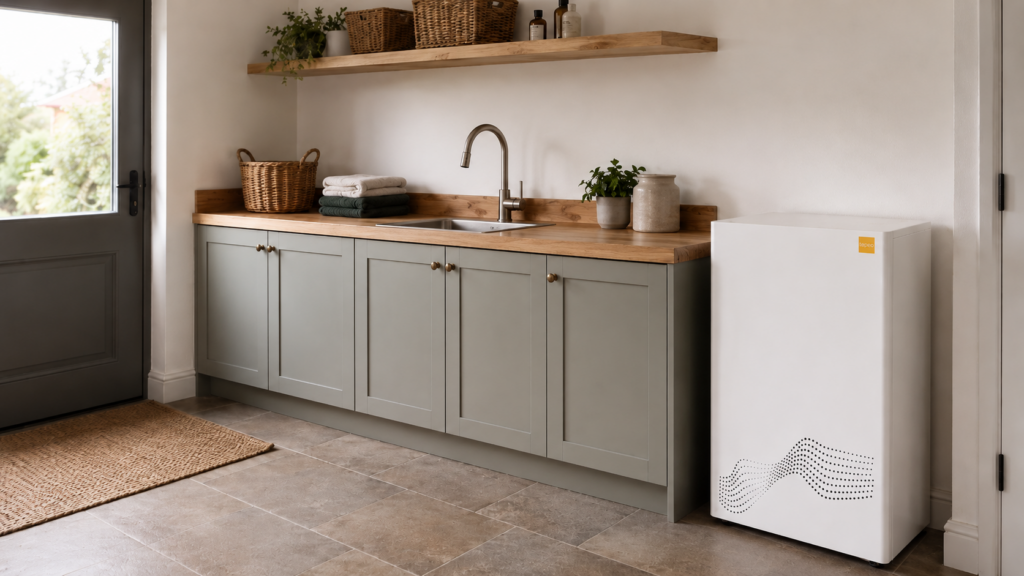
Considering a ZEB? Start your switch before winter
If your boiler is ageing, unreliable or expensive to run, waiting until it fails may leave you making a major decision under pressure.
Starting your research now gives you time to understand:
- your current heating use
- your property’s likely heat demand
- potential running costs
- carbon impact
- installation requirements
- the Early Grant Match
- available payment options
- whether a heat battery boiler is genuinely suitable
If the initial home checks are positive, a trained tepeoPRO installer can carry out a detailed and completely free home survey to provide a full quote. If the ZEB is not right for your property, they will tell you honestly.
[trustpilot reviews]
This summer will pass. The underlying risk will not.
The immediate heat will eventually ease. The structural choices remain.
We can continue to build our heating system around imported fossil fuels, accepting recurring price shocks and rising climate risk.
Or we can accelerate a transition towards cleaner electricity, stronger grids, greater flexibility and a wider range of credible low-carbon heating technologies.
That transition will require policy, infrastructure, finance and public investment.
It will also require households to make different choices when the moment to replace their heating arrives.
Frequently Asked Questions
What is a ZEB?
The ZEB is the name of tepeo’s heat battery boiler. ZEB40R is the model number of the current heat battery boiler.
Can solar panels work alongside a ZEB?
Yes. If you have solar panels, the electricity they generate may contribute to your household electricity use, including the energy used by the ZEB.
However, the ZEB does not currently offer a dedicated feature that charges it only from excess solar generation. Solar optimisation is currently under development.
How do smart electricity tariffs work with the heat battery boiler?
The ZEB charges like a battery and heats like a boiler. Instead of drawing electricity only when your heating is running, it can charge during lower-cost periods and store that energy as heat for use later.
Time-of-use tariffs offer different unit rates at different times of day, with cheaper electricity typically available during set off-peak windows. Dynamic tariffs go further, changing prices throughout the day in response to the wholesale electricity market.
The ZEB’s Smart Charging system uses your tariff, the local weather forecast and your home’s expected heating demand to decide when to charge and how much heat to store. This means you do not need to manually schedule it each day.
Which type of electricity tariff works best with a ZEB?
A time-of-use or dynamic tariff will usually offer the greatest opportunity to reduce running costs.
Static time-of-use tariffs provide a predictable period of cheaper electricity each day. These include many Economy 7, Economy 10 and electric-vehicle tariffs. Dynamic tariffs vary more frequently and can offer particularly low prices when renewable generation is abundant, although they require greater tolerance for changing rates.
A single-rate tariff will still power the ZEB, but it will not provide the same opportunity to benefit from lower-cost off-peak charging.
As a general guide, look for:
- at least four hours of off-peak electricity, as an empty ZEB takes approximately four and a half hours to charge fully
- an off-peak unit rate around one-third of the peak rate, where possible
Tariffs and prices change regularly, so it is important to compare the full terms rather than focusing only on the cheapest advertised rate.
Find out more about energy tariffs.
Does Smart Charging do the work automatically?
Yes. Smart Charging is designed to reduce the amount of manual input required. It considers:
- your electricity tariff and its cheaper charging periods
- the local weather forecast
- your home’s expected heating pattern
- how much stored heat is likely to be needed
It then plans when the ZEB should charge and how much energy to store, helping to avoid buying more electricity than your home is expected to need.
For dynamic tariffs, Smart Charging can also respond to changing electricity prices, aiming to charge during the most favourable periods available.
Can a ZEB and an electric car use the same smart tariff?
Potentially, yes. Many time-of-use tariffs are designed for electrified homes and offer cheaper periods that can be used for both an electric vehicle and a ZEB.
For example, your car could charge and your ZEB could store heat during the overnight off-peak window, ready for use the following day.
The best arrangement will depend on:
- the length of the tariff’s off-peak window
- your vehicle’s charging requirements
- your home’s heat demand
- the electrical capacity available at the property
- whether the tariff applies its cheaper rate to the whole home or only to specific devices
When comparing tariffs, consider the combined demand from your heating, vehicle and wider household rather than assessing each device separately.
Why can off-peak charging reduce carbon emissions?
Electricity demand and grid carbon intensity change throughout the day.
During periods of high demand, additional gas generation may be needed to balance the system. At quieter times, there may be more capacity from wind, solar, nuclear and other lower-carbon sources.
By storing heat in advance, the ZEB can shift electricity use away from some of the busiest periods. The precise carbon benefit varies according to the electricity mix at the time, but flexible charging can help the grid make better use of low-carbon generation and reduce reliance on peak-time fossil-fuel generation.
It is also worth noting that a tariff marketed as “100% renewable” does not necessarily mean renewable electricity is supplying your home at every moment. When you use electricity can therefore matter as well as the tariff you choose.
Does the ZEB work with Octopus Energy tariffs?
The ZEB is recognised as a Works with Octopus smart technology partner and is designed to work with Octopus Energy’s smart tariffs.
Octopus Go, Intelligent Octopus Go and Agile are among the tariffs used by some ZEB owners, although suitability will depend on your household, your other electrical devices and the tariff terms available at the time.
Other suppliers also offer suitable time-of-use and electric-vehicle tariffs, so Octopus is not the only option. The right choice is the tariff that works best for your complete household energy profile.
Why are heat batteries useful to the wider electricity system?
Heat batteries do more than replace fossil-fuel heating. Because they can store heat in advance, they can shift electricity use away from periods when demand on the grid is highest.
The Neat Heat trial, involving tepeo, OVO Energy and UK Power Networks, demonstrated that heat batteries could move up to 95% of peak electricity demand for heating into off-peak periods.
As more homes, vehicles and businesses electrify, this flexibility can help the grid accommodate more renewable generation while reducing pressure during busy periods.
What is tepeo doing to support changes in energy policy?
tepeo is working to ensure heat batteries are properly represented in the UK’s transition to low-carbon heating.
This has included joining other energy companies, consumer organisations and environmental groups in calling for lower electricity costs, engaging with Electrify Britain, and inviting ministers and MPs to see heat battery technology operating in real homes.
These visits allow policymakers to speak directly with customers and understand how heat batteries can provide an electric-heating option for homes where other technologies may be difficult to install.
tepeo continues to advocate for affordable electricity, fair support for different low-carbon heating technologies and policies that give households a genuine choice.
Read about Electrify Britain’s visit to tepeo
Read the Financial Times coverage of the campaign to lower electricity costs
Is a heat battery suitable for every home?
No. A credible transition to low-carbon heating requires different technologies for different properties.
The ZEB is designed for suitable homes with a wet central-heating system and may be particularly relevant where outdoor space is limited. However, suitability depends on factors including heat demand, available indoor space, electrical supply and hot-water requirements.
The important principle is not that every household should choose the same technology, but that every household should have access to an appropriate route away from fossil-fuel heating.