

Quick answer
A heat battery boiler is a low-carbon electric boiler alternative that stores electricity as heat, then releases it into your central heating system when your home needs warmth.
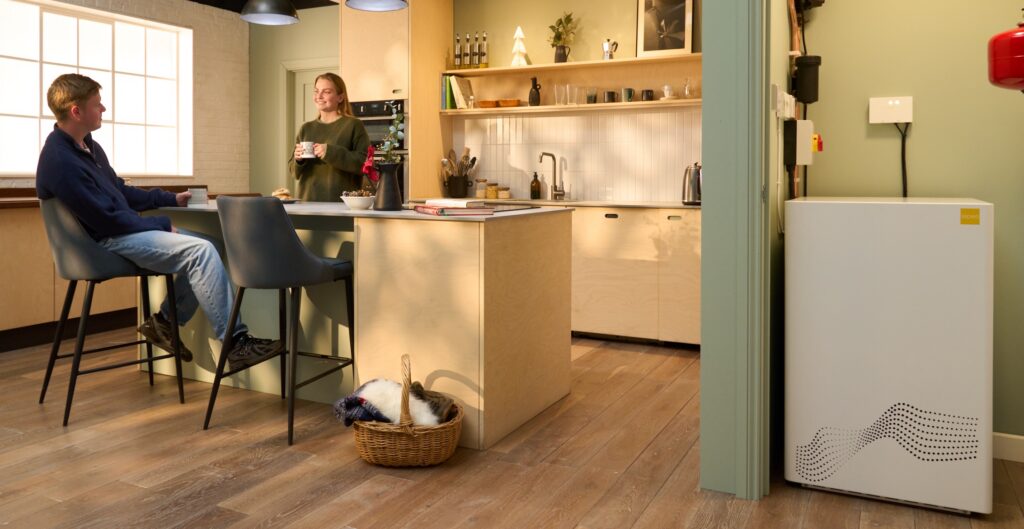
The tepeo ZEB heat battery boiler charges like a battery, heats like a boiler, works with many existing radiators, and does not need an outdoor unit.
For UK homeowners looking at boiler replacement in 2026, it offers a practical middle ground: a way to move away from gas, oil or LPG without needing every home to follow the same low-carbon heating route.
What is a heat battery boiler?
A heat battery boiler is a heating system that stores energy as heat instead of producing heat only at the moment you need it.
A traditional gas, oil or LPG boiler burns fuel when your thermostat asks for heat. A standard electric boiler uses electricity at the exact moment your home needs heat. A heat battery boiler works differently. It uses electricity to charge a thermal store, then releases that stored heat later into your wet central heating system.
Put simply: A heat battery boiler charges like a battery and heats like a boiler.
That means you can keep the familiar comfort of central heating, including radiators or underfloor heating in suitable homes, while moving away from burning fossil fuels in the home.
The tepeo ZEB is a heat battery boiler designed as a smarter replacement for a traditional boiler. It stores heat, uses smart electricity, and helps suitable homes reduce emissions without the major disruption many people associate with low-carbon heating.
How does a heat battery boiler work?
A heat battery boiler works by storing electricity as heat, then releasing that heat into your home’s central heating system when needed.
Here is the simple version.
1. It charges when electricity is cheaper or cleaner
The ZEB uses electricity to charge its internal heat store. With the right tariff, this can happen during off-peak periods, such as overnight, or at times when there is more renewable electricity on the grid.
This is one of the main differences between a heat battery boiler and a standard electric boiler. A standard electric boiler uses power when your home needs heat. A heat battery boiler can charge in advance, store that heat, and use it later.
2. It stores heat inside a solid-state thermal core
Instead of storing electricity like a home battery, the ZEB stores energy as heat.
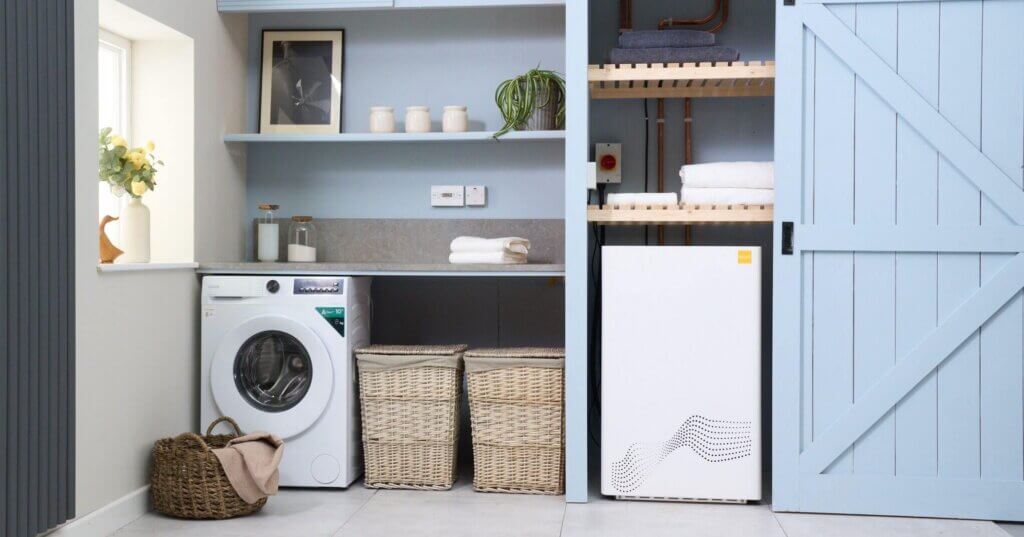
Inside the ZEB is a high-density, magnetite-based ceramic thermal core. This core stores heat at temperatures of up to 800°C, allowing the unit to hold up to 40kWh of heat in an appliance roughly the size of typical white goods.
That high-density storage is what makes the ZEB practical for whole-home space heating. The ceramic core is designed to withstand repeated heating and cooling without performance degradation.
3. It releases heat into your existing heating system
When your thermostat calls for heat, the ZEB transfers stored heat into your wet central heating system. In suitable homes, that means it can work with existing radiators, underfloor heating or other compatible heating circuits.
The ZEB does not send 800°C heat directly into your heating system. Instead, it uses a controlled air loop to extract heat from the core and pass it through a heat exchanger. A variable-speed fan helps control the heat output, allowing the system to deliver the right flow temperature to your central heating, assuming there is sufficient charge available.
The ZEB can deliver flow temperatures from 35°C to 80°C, similar to a conventional boiler. That means it can work with a wide range of existing radiators, thermostats and pipework, including microbore systems, subject to survey.
4. Smart software helps optimise comfort, cost and carbon
The ZEB does not simply charge at random. Its smart controls can take into account your heating habits, your home’s heat demand, weather forecasts and electricity tariff windows.
It then creates a charging schedule designed to keep your home warm while making better use of lower-cost, lower-carbon electricity.
Its state-of-charge algorithm helps estimate how much stored heat is available, while machine learning is used to predict how much heat your home is likely to need. The aim is simple: keep your home warm while charging at the lowest possible cost and carbon intensity.
See if your home could be suitable for a heat battery boiler.
Loading calculator...
Why heat battery boilers matter for greener homes
A heat battery boiler is not just a way to replace a gas boiler. It is also a smarter way to use electricity.
One of the biggest challenges in low-carbon heating is not simply how homes are heated, but when they draw power from the grid. If lots of homes use electricity for heating at the same time, demand on the grid rises, especially during busy morning and evening periods.
The ZEB works differently by decoupling electricity use from heating demand.
In plain English, that means the ZEB can use electricity when it is cheaper, cleaner or more abundant, store it as heat, and release it later when your home needs warmth.
For eco-conscious homeowners, this matters for three reasons.
First, it helps make better use of renewable electricity. As the UK adds more wind and solar power, there will be times when clean electricity is more plentiful. Smart heating systems that can shift demand into those periods will become increasingly important.
Second, it helps reduce pressure on the grid at peak times. Instead of adding to demand whenever the heating comes on, a heat battery boiler can charge earlier and release stored heat later.
Third, it gives homeowners a practical way to move away from fossil fuels without needing every property to follow the same route. Heat pumps are an excellent option for many homes, but they are not suitable for every property. A heat battery boiler gives households another low-carbon pathway, particularly where outdoor space, planning restrictions or retrofit disruption make a heat pump difficult.
The ZEB can also monitor grid frequency, allowing it to respond to changes in the electricity system. In the future, this kind of flexibility could allow heat battery boilers to support wider grid services, helping homes become part of a cleaner, smarter energy system.
This is what makes a heat battery boiler different from standard electric heating. It is not just electric heating. It is smart thermal storage for a cleaner electricity system.
Is a heat battery boiler the same as a heat pump?
No. A heat battery boiler and a heat pump are both low-carbon electric heating options, but they work in very different ways.
A heat pump takes heat from the outside air, ground or water and moves it into your home. That usually means an outdoor unit, a different heating pattern, and sometimes changes to radiators, pipework or insulation.
A heat battery boiler does not take heat from outside. It stores electricity as heat inside the unit, then sends that heat into your central heating system when needed.
That means a heat battery boiler can be a strong option for homes where a heat pump is not practical, too disruptive, or not the homeowner’s preferred route.
Is a heat battery boiler a combi boiler alternative?
For many suitable homes, yes—a heat battery boiler can be a practical alternative to a combi boiler for space heating. It’s designed to replace the boiler function in a wet central heating system.
The main difference is that a combi boiler heats hot water instantly when you turn on the tap, while a heat battery boiler stores heat and delivers it to your central heating system. For hot water, you may need a cylinder or another compatible solution, depending on your current setup and needs.
That is why a home survey matters. It checks how your heating and hot water work today, what your home needs, and whether the ZEB is the right boiler replacement for you.
Does a heat battery boiler need an outdoor unit?
No. One of the biggest advantages of a heat battery boiler is that it does not need an outdoor unit.
That makes it useful for homes where an outdoor unit is difficult, restricted or undesirable, including:
- flats or terraced homes with limited outdoor space
- homes in conservation areas or listed buildings
- properties where planning restrictions may be a concern
- homeowners who want to avoid external equipment
- households that want a lower-disruption route away from gas, oil or LPG
A heat battery boiler is installed indoors and connects to your home’s heating system. In many cases, it can work with existing radiators and controls, subject to survey.

Can a heat battery boiler work with existing radiators?
In many suitable homes, yes. The ZEB is designed to work with familiar wet central heating systems, including radiators and underfloor heating. That’s one of its key advantages, it can often be installed with less disruption because you don’t need to redesign your whole heating system, aiming to keep as much of the existing set-up as possible.
Your installer will still need to check:
- radiator sizes
- pipework
- heat loss
- hot water setup
- electrical supply
- possible unit location
- access to a suitable electricity tariff
If your home is a good fit, you can usually keep all the parts of your central heating you already like, while switching to a more sustainable way to power it.
How much does a heat battery boiler cost to run?
There is no single running cost for a heat battery boiler because every home is different. Your costs depend on your home, your heating habits and your electricity tariff.
The main factors are:
How much heat your home needs
Larger, older, or less insulated homes will typically require more energy to heat. Good insulation and lower heat loss help keep running costs down.
Your electricity tariff
Heat battery boilers are designed to take advantage of smart or off-peak tariffs. By charging mostly during cheaper, lower-carbon periods (such as overnight or on time-of-use tariffs), you can reduce your running costs substantially.
Your heating pattern
Homes with steady and predictable heating needs are usually easier to optimise for savings than those with very high or irregular demand.
How well the system suits your property
The ZEB isn’t one-size-fits-all. A home survey helps determine if it’s a good match for your property and likely to perform efficiently.
A simple way to think about it: Running costs depend less on “electric heating” in general, and more on when the electricity is used. A standard electric boiler uses electricity whenever heat is needed—even during expensive peak times. A heat battery boiler can charge up ahead of time using cheaper, off-peak electricity, then store and release heat as needed.
Is a heat battery boiler cheaper to run than a gas boiler?
It can be, but it depends on your home and tariff.
Gas has traditionally been cheaper per unit than standard electricity, which is why direct electric heating can be expensive. A heat battery boiler changes the comparison by using electricity more intelligently.
Because the ZEB can shift charging into low-cost off-peak periods, running costs can be similar to a heat pump with a seasonal coefficient of performance of 3, depending on the tariff and home. It can also have a fraction of the running cost of a direct electric boiler because heat output is decoupled from charging.
However, it would not be honest to say every home will automatically save money. The right comparison depends on your current boiler, current fuel, heat demand, tariff options and how you use your heating.
That is why tepeo’s Home Checker and Cost & Carbon Calculator are important next steps. They help estimate whether the ZEB is likely to make sense for your home before you commit.
Is a heat battery boiler energy efficient?
A heat battery boiler is “energy-smart” rather than “heat-pump efficient.”
Heat pumps achieve higher efficiency by moving heat from outside—they can deliver several units of heat for each unit of electricity. In contrast, a heat battery boiler like the ZEB is 100% efficient at converting electricity into heat, but it doesn’t multiply energy in the same way.
The key advantage of the ZEB is flexibility: it stores heat so it can charge up when electricity is cheaper and greener, then release that heat later through your existing central heating system. This helps your home use electricity more intelligently while keeping the heating experience familiar.
As the UK grid gets greener, systems that can shift electricity use away from busy peak periods—and towards times when energy is cleaner and less expensive—will only become more valuable
Who is a heat battery boiler best for?
A heat battery boiler may be a good fit if you:
- want to replace a gas, oil or LPG boiler with a low-carbon alternative
- like your current central heating and want to keep radiators where possible
- have been told a heat pump is not suitable for your home
- do not have space for an outdoor heat pump unit
- want to avoid a major retrofit
- currently use direct electric heating and want a smarter alternative
- want zero emissions at the point of use
- are interested in smart tariffs and lower-carbon electricity
- want a practical step away from fossil fuel heating
For anyone torn between another gas boiler or trying to make a heat pump work, a heat battery boiler offers a third way.
Who might not be right for a heat battery boiler?
A heat battery boiler will not be the best fit for every home.
It may not be right if:
- your home has very high heat demand
- you cannot access a suitable electricity supply
- there is no practical indoor space for the unit
- you need a hot water setup that is not compatible
- your property would be better served by a heat pump
- you cannot access a tariff that supports smart charging
- you want the lowest possible energy use and your home is well suited to a heat pump
The right low-carbon heating system depends on the home. The best first step is not guessing. It is checking suitability.
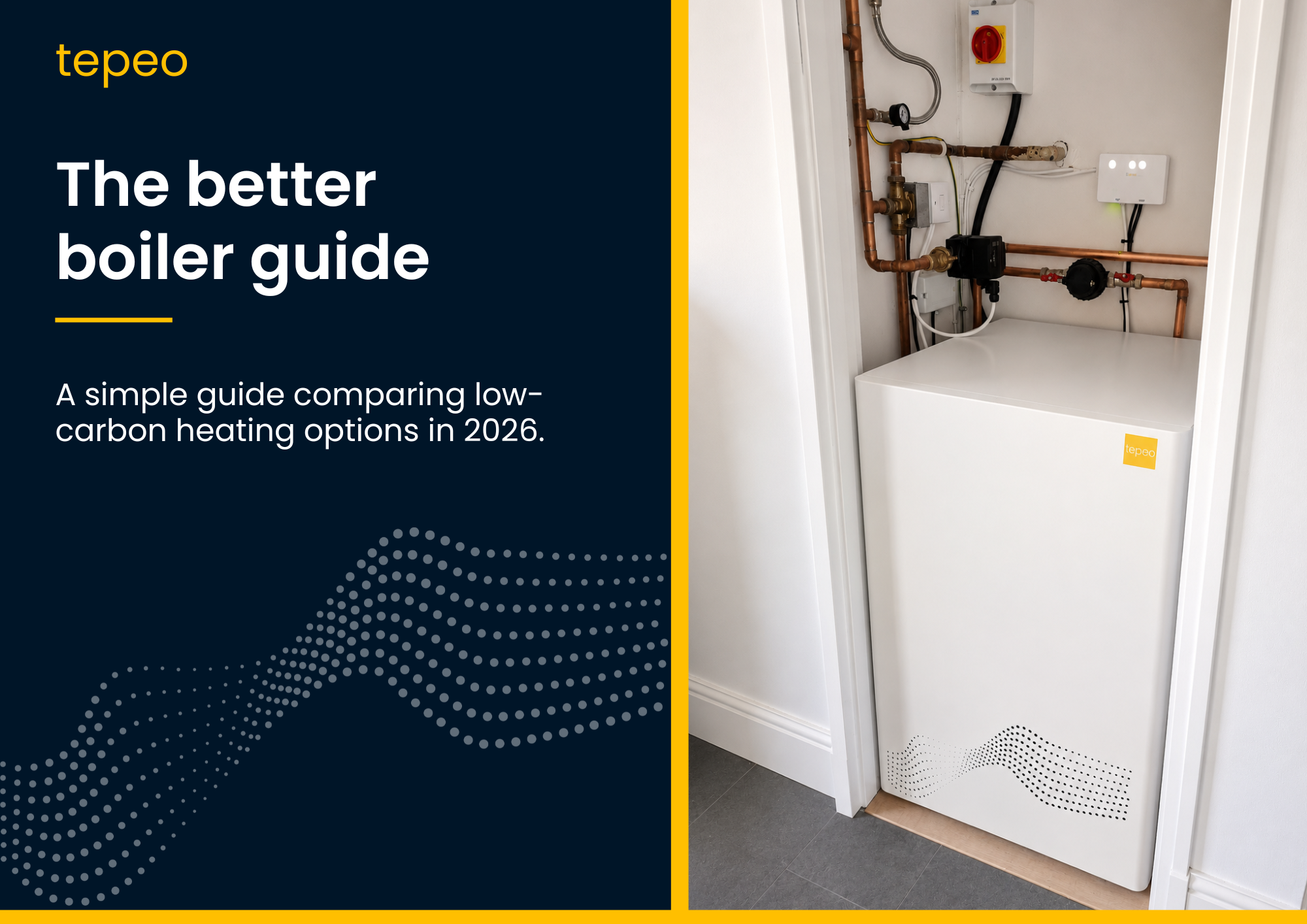
Download the free Better Boiler Guide
A simple guide comparing low-carbon heating options in 2026.
What about upfront cost and the Boiler Upgrade Scheme?
The upfront cost of replacing a boiler with a ZEB heat battery boiler depends on your current system, your home, and any extra work required during installation.
A typical quote may include:
- The ZEB heat battery boiler
- Installation labour
- Electrical supply work (if needed)
- Removal/decommissioning of your old boiler
- Connection to your heating system
- Changes to hot water storage (if required)
- Controls and commissioning
- Internet connection setup
- Eligibility for grant support
As a guide, the ZEB has a capital cost of £6,000 (including VAT) before any subsidy. Installation costs vary, depending on your property and the work involved.
The UK Government is expanding the Boiler Upgrade Scheme to include heat battery boilers. Once live (expected winter 2026), eligible homeowners in England and Wales should be able to claim £2,500 off the installation cost. This grant is paid to your installer and taken off your invoice, rather than being sent to you directly.
To be eligible for BUS support, you’ll usually need to:
- Own the property
- Be replacing an existing gas, oil, LPG, or electric heating system
- Use an approved installer (when the scheme opens to heat batteries)
- Meet property and installation requirements
- Be based in England or Wales
Most new builds, social housing, and properties already supported by other government schemes aren’t eligible. Grant rules can change, so it’s always best to check the latest details before making a decision.
Until the Boiler Upgrade Scheme opens to heat batteries, tepeo offers a £2,500 early grant match – ask our team if you qualify.
The best place to start is with tepeo’s Home Check, which can tell you if the ZEB is suitable for your property, check likely eligibility for grant support, and help you plan your next steps.
How long does a heat battery boiler take to install?
The ZEB is designed to be a relatively simple 1–2 day install in suitable homes.
It needs a power supply, a connection to the central heating flow and return, and an internet connection. Because it can deliver boiler-like flow temperatures and work with many existing heating systems, it can often avoid the level of disruption people associate with a major heating retrofit.
Every home is different, so installation time and requirements will always depend on your property, current heating system and survey results.
Heat battery boiler benefits at a glance
A heat battery boiler can offer:
- No outdoor unit requirement
A practical option where a heat pump outdoor unit is difficult. - Familiar central heating
Designed to work with wet heating systems in suitable homes. - Lower disruption
A boiler-like replacement route for many homes. - Smart running cost potential
Charges when electricity is cheaper where suitable tariffs are available. - Zero emissions at point of use
No gas, oil or LPG burned in the home. - A future-fit heating choice
Designed for a cleaner, more flexible electricity grid. - A practical heat pump alternative
Useful where a heat pump is not the right fit.
Is a heat battery boiler right for your home?
The easiest way to find out is to check your home.
A heat battery boiler could be right for you if you want low-carbon heating without losing the familiar feel of a boiler. It is designed for people who want to be warm, comfortable and confident in their heating choice without unnecessary disruption.
Start with tepeo’s Home Check to see whether your property could be suitable. You can then speak to the team about your current boiler, running costs, hot water needs, grant eligibility and whether the ZEB is the right replacement for your home.
The bottom line
A heat battery boiler is a smarter boiler replacement for homes that want to move away from gas, oil or LPG without the disruption that can come with some low-carbon heating options.
It is not a heat pump. It is not a standard electric boiler. It is a different category: a heat battery boiler.
It charges like a battery. Heats like a boiler. And for the right home, it can offer everything you like about central heating, without the gas.